Worked example
One trip, start to finish.
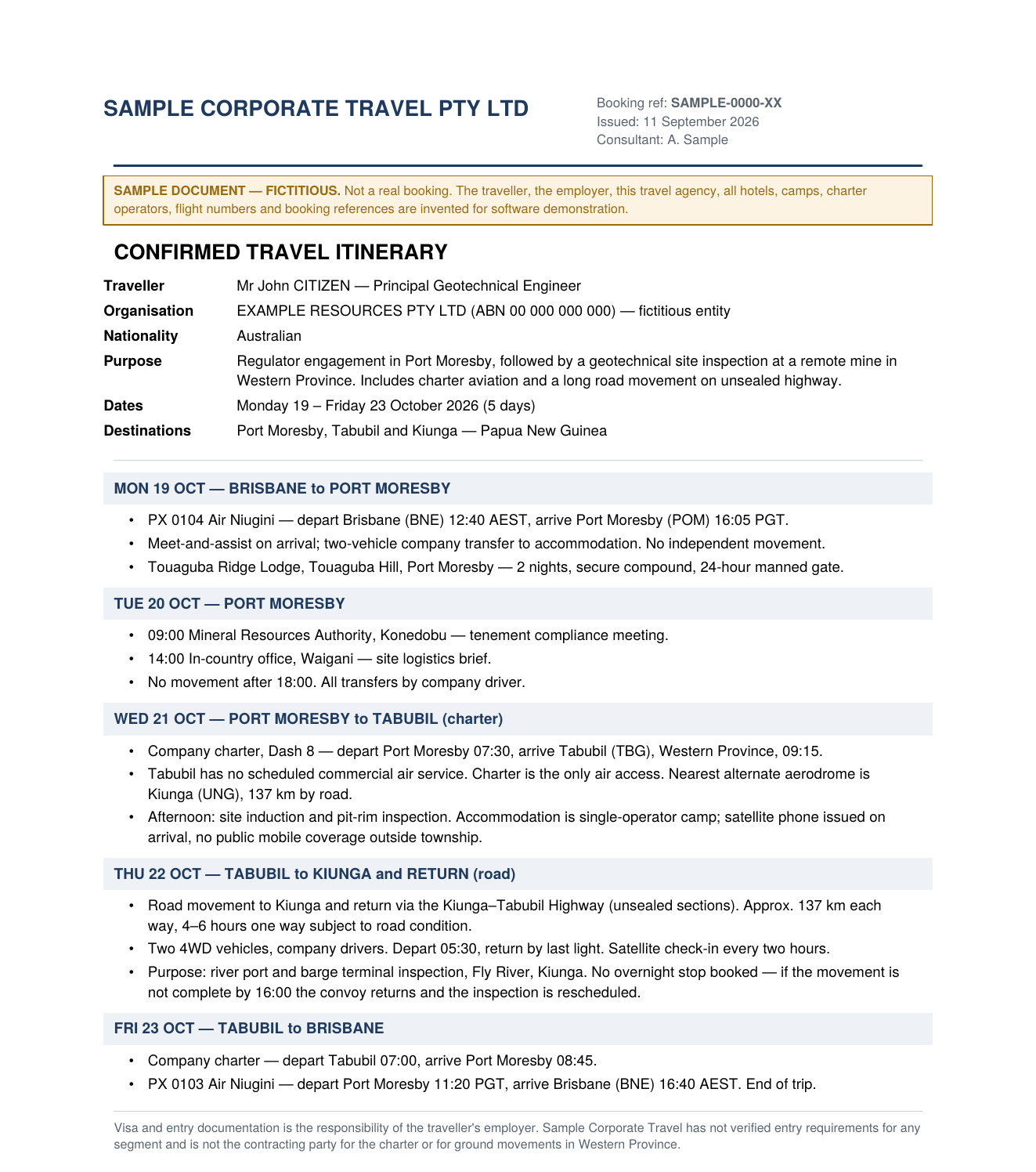
Five days into Papua New Guinea — two days in Port Moresby, a charter flight to a mine site with no scheduled air service, and 137 km of unsealed highway to a river port and back. Below is what went in, what came out, and what a person still has to do with it.
One itinerary. Nothing else typed.
An itinerary is uploaded as a PDF. Every destination and transit point is extracted from it, including the ones that never appear on a flight booking — the charter leg, the site camp, the road movement to Kiunga.
Rated, scored, and stamped with when.

Reference number, risk score out of 25, approval state, the exact minute the government advisories were read, and the exact minute the assessment was signed. Six minutes between those two stamps on this demonstration run — and that time is the point only insofar as it leaves as much time as needed with the traveller and the approver to settle how the safety side of the trip will actually be managed.
Three MEDIUM destinations do not average to MEDIUM.
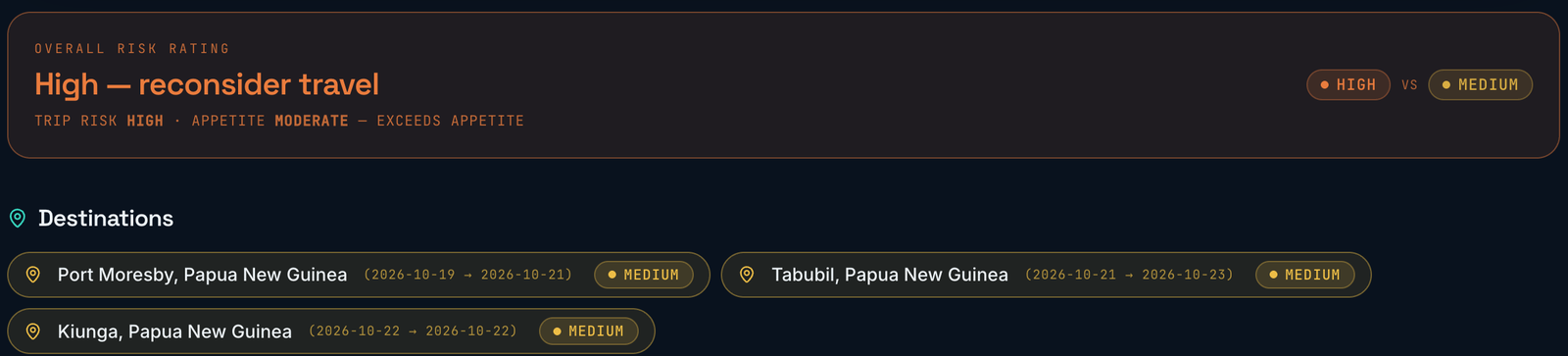
The trip rating is measured against the organisation's stated risk appetite. This one exceeds it — so it automatically routes to a higher authority to sign. Understating risk is the dangerous error, so where a rating is ambiguous it rounds up.
Current government advice, and the time it was read.
Destination sections draw on live Five Eyes government travel advice, and the assessment records the moment the advisories were read. Where the five governments disagree, the assessment shows the disagreement rather than picking one. On a destination like Papua New Guinea, that gap is itself a finding.
The file you keep, and the card they carry.
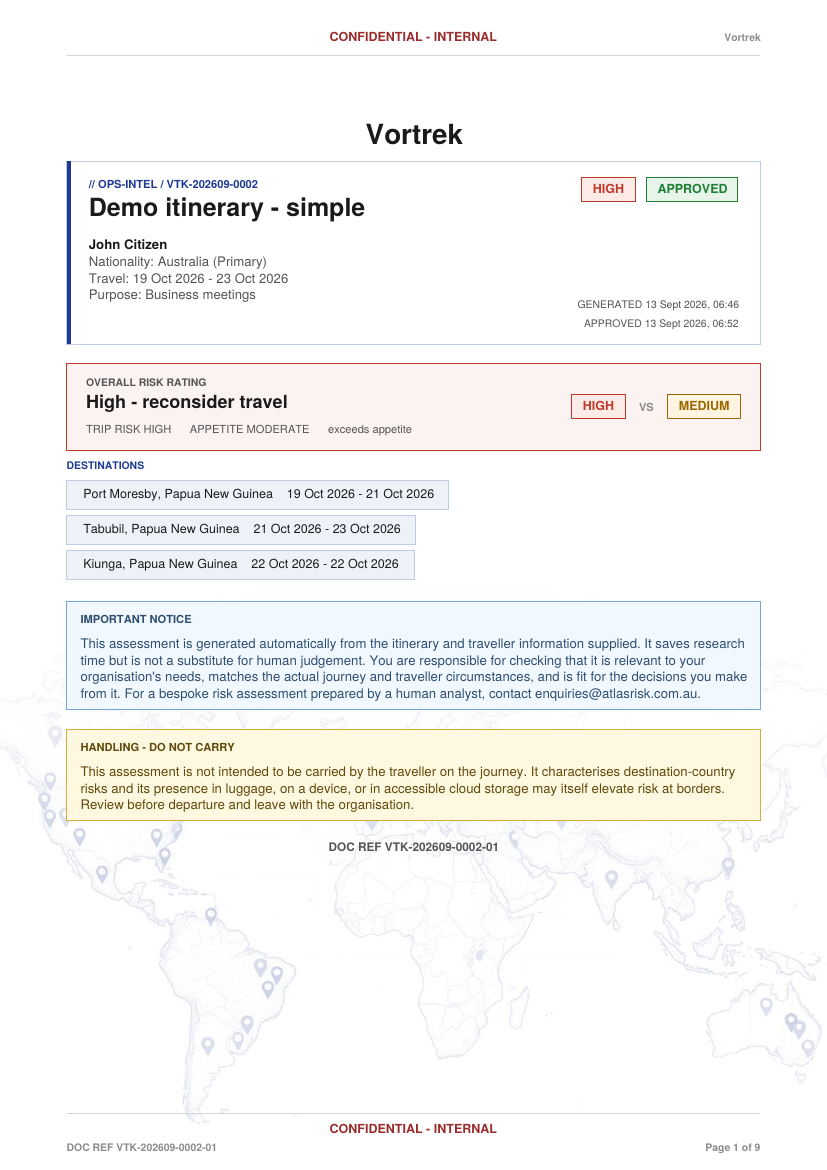
Marked CONFIDENTIAL · INTERNAL. Full destination ratings and rationale, entry requirements, health advisories, local laws and customs, emergency contacts, and the consolidated Five Eyes comparison. Stays with the organisation.
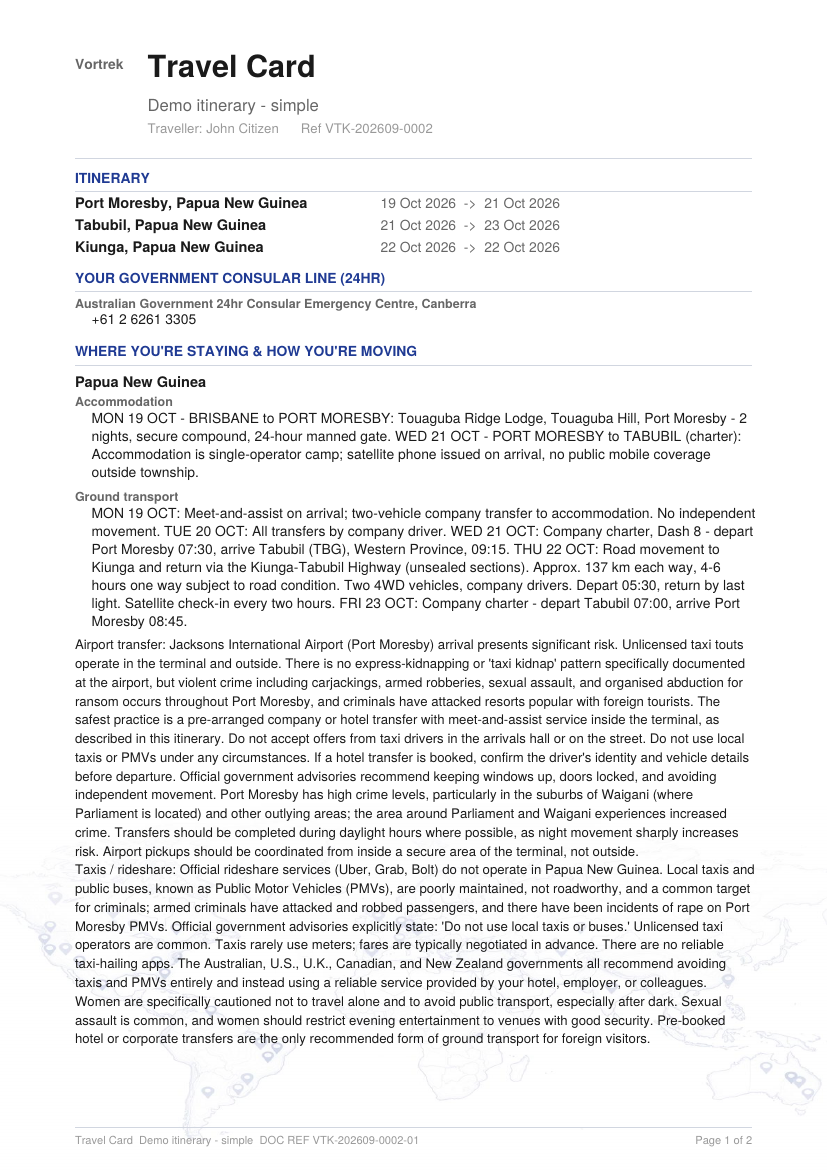
Tear-line. Consular emergency line, accommodation, and the ground-movement rules that actually apply — written to be read on the way to the airport, not filed.
Both carry the same document reference, so a briefing can always be tied back to the assessment it came from.
The assessment itself can be the risk.

A document that characterises a country's political and security sensitivities is not something you want found in a traveller's luggage, on their device, or in cloud storage that is accessible at a border. Vortrek marks the full assessment accordingly and issues the traveller a separate tear-line card instead.
Automation drafts. People decide.
Vortrek produces the assessment and holds the record. It does not make the decision, and it is not a substitute for judgement about your own people and your own operation. The duty of care sits with the employer.
Treatments are proposed, not imposed. They go to the traveller and the approver, and the position they settle on is what gets recorded.
Approval sits where the rating puts it. Residual risk against appetite determines the authority level required to sign.
Acknowledgement is captured. Timestamped against the assessment and written to the organisation's audit log.